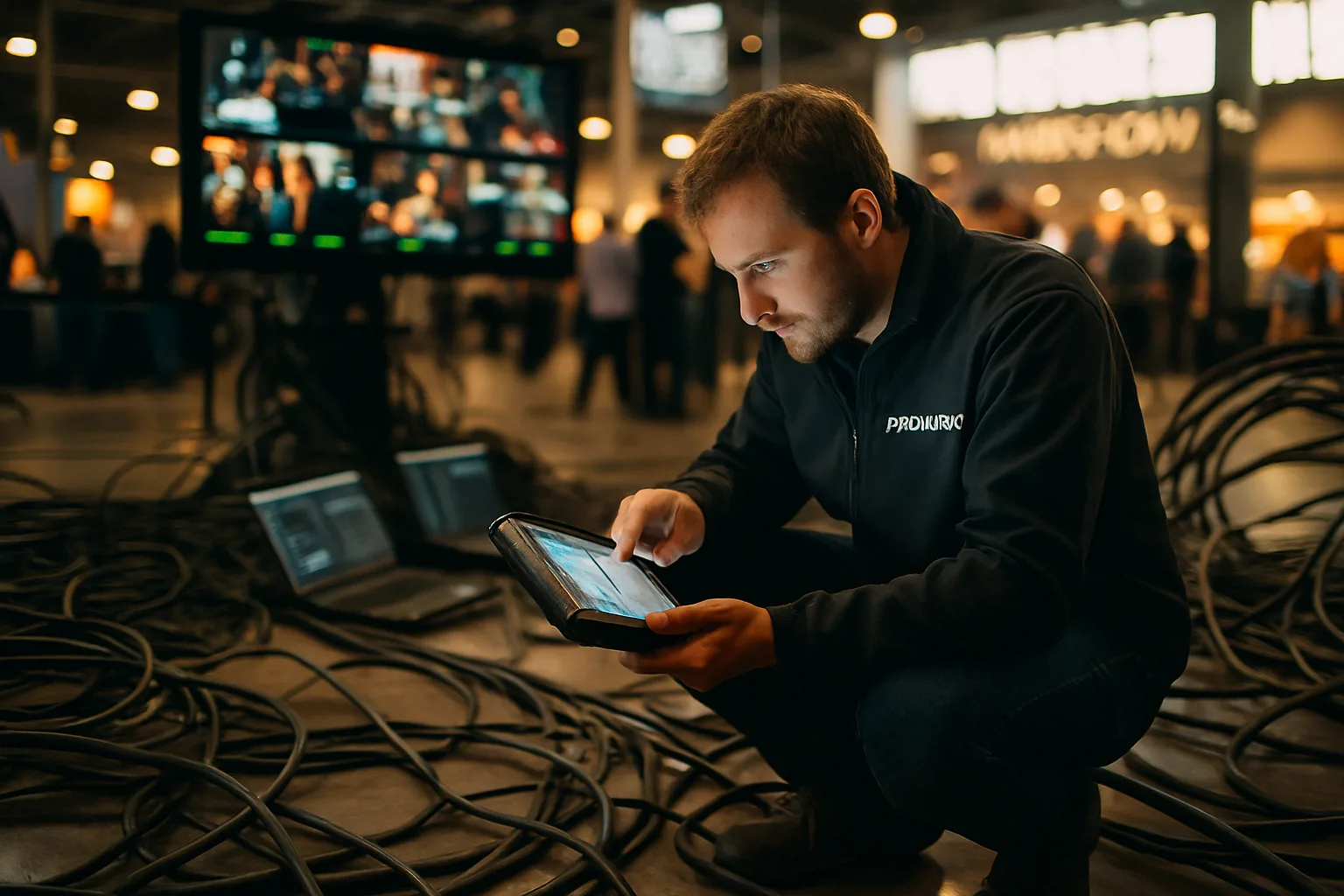
The NAB Show 2026 showcased groundbreaking trends in broadcast and production technology, emphasizing flexible, software-driven workflows and enhanced audience engagement.
- Software-defined solutions are replacing traditional hardware setups.
- SMPTE ST 2110 is now a staple for IP network integration.
- AI is now a practical tool in broadcast production.
- Cloud-based infrastructures are becoming industry standards.
- Immersive audio is transforming audience experiences.
As the broadcasting world evolves, the NAB Show 2026 highlighted how the industry is embracing cutting-edge technology to stay ahead. With a focus on flexibility and enhanced connectivity, the event underscored significant trends that are reshaping the future of media production.
Software-Defined Live Production: The New Era
The shift towards software-defined live production is revolutionizing how broadcasters approach live events. By replacing traditional hardware-centric setups with software-based solutions, companies are now able to achieve unprecedented levels of flexibility and scalability. This trend not only reduces operational costs but also accelerates deployment times.
Benefits of Software-Defined Production
- Scalability: Easily adjust to varying production needs.
- Cost Efficiency: Lower investment in physical hardware.
- Rapid Deployment: Faster setup and updates.
Embracing SMPTE ST 2110: The Backbone of IP Networks
Adopting the SMPTE ST 2110 standard is now commonplace, offering a robust method for transporting uncompressed video, audio, and metadata across IP networks. This ensures seamless integration and interoperability among various devices and systems within the broadcast environment.
The adoption of SMPTE ST 2110 is foundational for modern broadcast workflows, providing the connectivity and flexibility needed for future growth.
AI in Action: From Experimental to Essential
Artificial Intelligence is transforming from an experimental novelty to an essential tool in broadcast operations. From workflow optimization to metadata generation, AI applications are enhancing efficiency and accuracy in media production.
AI Applications in Broadcasting
- Monitoring: Real-time content analysis.
- Workflow Optimization: Streamlined operations.
- Media Asset Management: Automated sorting and tagging.
Cloud-Based Production: The New Standard
The integration of cloud-based production has transitioned from experimental to essential. Companies are leveraging cloud infrastructure to complement traditional control rooms, providing scalable resources that enhance production capabilities.
Advantages of Cloud Integration
Utilizing cloud technology offers numerous benefits:
- Resource Scalability: Access to unlimited computing power.
- Remote Accessibility: Global collaboration made easy.
- Cost Management: Pay-as-you-go models reduce expenses.
Immersive Audio Solutions: Redefining Audience Engagement
Immersive audio technologies are taking center stage, with Sennheiser showcasing advancements that promise to elevate audience experiences. High-quality, immersive sound is becoming a crucial component for engaging viewers in both live and on-demand settings.
| Technology | Benefits |
|---|---|
| Immersive Audio | Enhanced listener experience |
| Cloud-Based Production | Scalable and cost-effective |
Business Benefits and Future Prospects
The trends showcased at the NAB Show 2026 are not just technological marvels; they are strategic shifts that offer tangible business benefits. By adopting these innovations, companies can achieve greater operational efficiency, cost savings, and audience engagement. For businesses looking to stay competitive, embracing these trends is not just an option but a necessity.
Frequently Asked Questions
What is software-defined live production?
It's a system that uses software solutions instead of traditional hardware for live production, offering enhanced flexibility and scalability.
How does SMPTE ST 2110 impact broadcasting?
It facilitates the transport of uncompressed video, audio, and metadata over IP networks, ensuring seamless integration and interoperability.
Sources
- Ten Broadcast & Production Technology Trends From NAB Show 2026 | Live Design Online
- Sennheiser Group Shows Latest Immersive Audio Solutions & Wireless Technologies At NAB 2026 | Live Design Online
- Disguise To Showcase Cutting-Edge Experience Tech For Sports, Broadcast And More At NAB 2026 | Live Design Online
- Neutrik Group Americas Launches NEUTRIK TRUE1 DATA Connector Series at NAB 2026 | Live Design Online
- Solid State Logic Enhances Virtualized System T Platform To Deliver Scalable Cloud & On-Prem Production For NAB 2026 | Live Design Online